
How to Grow a Bonsai Tree
Whether you want to instill a taste of the Orient into your garden, house, or general space, or you simply like the look of them, a bonsai tree is a wonderful addition.
Many people think of bonsai trees as art, the same way they think of the Mona Lisa as art. It’s something beautiful, mysterious but ultimately unattainable and expensive. To the bonsai masters, these trees are the culmination of years of patience and a testament to their skill. And to a growing number of people, the bonsai is a hobby, a joy, a lifestyle.
You shouldn’t go into this thinking that the upkeep is going to be easy, however, because just like adding a new pet to your family, a bonsai tree needs to be pruned, fed, watered, and maintained, just like a part of your brood!
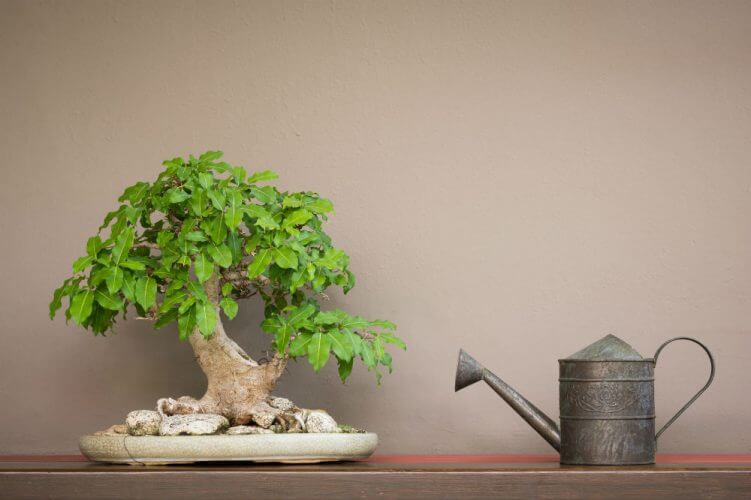
However, first things first, what is a bonsai tree?
What is a Bonsai Tree?
A bonsai tree is basically a miniature tree, but it is one which has roots in Oriental and Japanese history. It’s actually quite interesting to find out about this in more detail because that will enrich the growing and maintenance part of having this attractive plant in your house.
Bonsai is the ancient art of growing and styling miniature trees. It has been around for centuries. It comes from the Japanese character “bon” which means a dish or a thin bowl and “sai”, a tree which is planted like a spear stuck into the ground. Quite literally, it means “planted in a container.”
The end goal of bonsai growers is to create a realistic but miniaturized representation of a tree. Despite its already small stature, the bonsai is classified according to its size. The so-called mini-bonsai, the mame and the shohin, are 2”-6” and 5”-8” respectively. A komono bonsai is 6” -10” high while an omono is 30” – 48”. A big bonsai is called an imperial bonsai and is grown to 60” – 80”.
A bonsai tree can be grown indoors or outdoors, but it really depends on the country you are living in and the climate involved.
Bear in mind that bonsai trees are used to warm, humid climates, such as those found in the Far East, so if you live in a country which is the opposite of this, such as Europe or the USA, you will probably want to grow and keep your bonsai tree indoors.
Traditionally, a bonsai tree is grown outdoors in containers, but sometimes the climate and the false environment, away from what this type of tree knows, can cause it to die prematurely. For this reason, indoors is probably best.
There are several types of bonsai tree, namely the Ficus Bonsai, the Crassula, the Carmona, the Schefflera Arboricola, and the Sageretia. The most common of them all is the first one we mentioned, the Ficus Bonsai, and this is the type that you will see most often in photographs.
The reason for the popularity of this type of bonsai is that it is quite strong, and it is tolerant to lots of different changes in condition, such as humidity. For that reason, you should probably start with this type and work your way up to other types, which perhaps aren’t as hardy.
Having said that, there are certain bonsai trees which can’t be kept indoors, because they require a set amount of time during the winter when they regenerate, ready for their next growth cycle. In order for the tree to ‘rest’, it needs the conditions of winter on a constant basis, e.g. low temperatures and less light, which is what it won’t get indoors.
The History of The Bonsai Tree
Everyone assumes that the bonsai tree is Japanese, but it actually originated in China well before that.
Over 2000 years ago the origins of the bonsai tree began in China, when miniature settings were created, e.g. the Chinese Empire seemed to have an obsession with creating landscapes of real places which are smaller in scale, the trees included.
The bonsai in Chinese legends
The Taoists believed that that there’s energy and power in nature, and recreating a particular natural feature (a mountain, waterfall or forest) in miniaturized form bestows it with a concentrated magical energy. This gave rise to the art form penjing, which means “tray scenery.” One of its forms was the penzai or punsai (“tray plant”), a landscape that was created with miniature rocks and trees.
There are several legends and recorded documents about the existence and development of tray scenery. In one such legend, an emperor during the Han Dynasty was said to have recreated his entire empire in a landscape in his courtyard. It was very detailed – complete with hills, mountains, valleys, lakes, rivers and trees. He would then gaze at his whole empire from a window in his palace. And only the emperor could have this type of art form; anyone found with even a miniature landscape was considered a threat to his empire and immediately put to death.
The earliest recorded proof of the existence of punsai (bonsai) was found in the tomb of Prince Zhang Huai of the Tang Dynasty. An excavation of his tomb in 1972 revealed two wall paintings that showed a servant carrying a miniature landscape while another was depicted carrying a pot containing a tree.
Chinese monks introduced punsai in Japan. The Japanese quickly learned the art, which was then called bonsai, and they developed the growing techniques that are still being used today. The art form was introduced to the west in the 1700s but only started to become popular after World War II.
There is some mysticism in this because it was thought by the Chinese at the time that the more accurate the recreation of a real landscape, the more magic it held.
Of course, this was all quite interesting to neighboring empires and countries, and the Japanese soon caught onto the trend.
The bonsai arrives in Japan
It was also during the Han Dynasty when Chinese monks travelled to Japan and other Asian countries, bringing with them the knowledge, as well as examples, of penzai. The Japanese monks quickly learned the art and started developing their own techniques of cultivating the dwarfed trees. Their creations, which were finally called bonsai, symbolized the harmony between man, nature and the soul.
The bonsai soon made its way out of the monasteries and into the royal palace and the homes of the wealthy. As it was in China, the bonsai soon became a thing that was revered and one that reflected the honor of the family. It became a status symbol that only royalty and the wealthy had the right to have. These families even had special shelves built in their homes in order to showcase their bonsais with the highest honor. But limiting the bonsai to the nobles and affluent classes almost caused the art to disappear in Japan. The Chinese invasion of Japan soon changed the status quo and the fate of the bonsai. Soon, people of all classes could practice the art of the bonsai and it began to gain popularity.
Over time the style of a bonsai tree has changed into a more Japanese kind of style, which is why so many people assume that a bonsai tree is actually Japanese in origin.
The art form evolved with the changing of Japanese philosophy. Starting in the 1600’s, the lush landscapes became austere as bonsai growers pruned all but the essential parts of the tree. This change reflected the Japanese’s philosophy that to improve one’s life, all but the necessary are eliminated. It’s a philosophy that the country still follows today and one that can still be seen in the stark simplicity of modern Japanese gardens.
The bonsai arrives in the West
In the mid-1600s, merchants who trade to and from Asia brought back reports of miniature trees being grown in small trays. By the 1700s, several provinces in Japan started showcasing their best bonsais in competitions. Some groups even joined world exhibitions in major cities like London and Paris where bonsai growers shared some of their techniques. However, many Westerners felt that how the trees were grown and shaped were grotesque. There were some very vocal criticisms about it and the bonsai wasn’t looked at as an art form.
The end of World War II meant the beginning of so many things, like an increased awareness and exposure to Japanese culture. Soldiers returning from the war brought back bonsais; and even though most of the bonsais brought back died shortly, it was enough to renew interest in the art. Japanese-American families were very important in this respect as they were able to impart their knowledge of bonsai.
Learning the art was a slow struggle for some westerners as Japanese and Chinese immigrants were not keen on sharing their knowledge and techniques. It was only in the 1960s that westerners were able to gain some headway. A group of Americans studied the art of bonsai in Japanese nurseries and founded the American Bonsai Society upon their return.
The bonsai has certainly come a long way. Where the art was once shrouded in secrecy, information about it and its techniques can now be read in over a thousand books written in more than 26 languages. There are also hundreds of classes, associations and websites about it, all with the goal of teaching and propagating the art form.
The Basic Steps in Growing a Bonsai
Ancient practitioners of bonsai believe the art transcends time. A bonsai is something that remains with you until the end; a legacy that someone from your line can continue.
Growing a bonsai is more than just simple gardening though. There’s something therapeutic in caring for one. A bonsai teaches patience while enabling one to release stress.
The idea of growing something so delicate is something alot of beginners find daunting, but starting your own bonsai is not as hard, or scary as you think it is as long as you consider these basic steps.
Pick the right bonsai tree for you
Contrary to popular belief, bonsai trees are not trees that have been genetically changed. Rather, they are trees that have remained small due to a combination of several techniques, like control of the root system, wiring and regular pruning.
The first thing you need to decide on is where to get your tree. There are several ways to get one –
- Start from zero and plant a tree from seed. This is the most rewarding but the slowest process as you have to wait for your tree to grow roots and become strong before you can start training and shaping it. This will take several years, depending on the species of tree you chose.
- Look for or buy a young plant: This method is a bit faster as you’ll start with a “prebonsai”, a tree that’s already been germinated but in an early stage.
- Buy a full grown bonsai: This is the easiest way, but also the least informative since all you’d have to do is to ensure that it stays alive.
- Find a nice looking fake bonsai tree that is low maintenance, just requiring a dust every now and then. Some of the best artificial bonsai trees can really make a home feel tranquil.
Bear in mind though that any tree can be made into a bonsai so there’s no such thing as “bonsai seeds.” Vendors selling these types of seeds are actually just peddling ordinary tree seeds.
Once you’ve decided on where to get your tree, choose what specie you want to grow. Make sure you consider your environment and circumstance.
- If you’re growing your bonsai outside, choose species that flourishes in your region. Deciduous trees like Japanese elms, magnolias and oaks are good bets.
- People living in hot climates or those who’ll be growing the bonsai indoors should go for tropical species like Jade or olive trees.
- Coniferous trees like pines, junipers and cedars are also great and beautiful choices.
How to Grow a Bonsai Tree from Seed
Now, before we start you need to know one thing about growing a bonsai tree from scratch – it can take years (around three) before the tree is at its peak in terms of life and beauty. Despite that, the process is rewarding, so this isn’t something you should shy away from.
If you don’t have the time or the patience, yes, you can buy a pre-grown bonsai tree and stick to the maintenance side of it, which we will talk about later on in this article. For now, however, let’s look at how to grow a bonsai tree.
Obtain your seeds
You can either purchase bonsai seeds online, or you can do what most people do, and go down the natural route. The bottom line is that growing a bonsai tree is about how you actually cultivate and grow it, not really the type of seeds. You can collect seeds from the local, regular trees in your area, such as the fig tree or the juniper bonsai.
These are the two most popular. If you search around during the autumn season you will find this process easier, as the seeds will be lying on the ground or easy to obtain, either from inside pine cones on conifer trees, or acorns or chestnuts lying on the ground. If you want to go down a specific bonsai shop, however, check online and shop around for the best deals.
Plant your seeds at the right time
Autumn is a good time to start the process because this ties in with Mother Nature and cuts down on additional work.
The planting process
When planting seeds you will need to do each seed individually, which is totally different from any other type of plant you may have tried to grow in the past. When you ask ‘how to grow a bonsai tree’, you probably didn’t realize how much work and patience would need to go into it, but it is something which will be hugely rewarding in the end.
1. In a large container/planting tray place one layer of grit or lava rock. Basically, you need a material which is coarse and which drains water.
2. On top of the grit, add in another layer but this time using bonsai soil. This is something you will need to visit a large horticultural store for this or shop online in specialized bonsai tree stores.
3. Now you will need your seeds. Place each side on top of the soil, making sure you leave a little space between them, so they don’t overlap when they grow.
4. On top of the seeds, you need to add another layer of the specific bonsai soil, making sure you don’t go over around 2cm in thickness for this layer. Pat the layer down a little to compact it in.
5. Water the soil very well, and this is something you will need to do regularly, as the soil needs to be constantly a little wet.
Growing a bonsai tree from seed is the longest process because you will need to do this for around three years without pruning, before you see major results. If you would like a visual rerun on this information, and a few more tips, check out books, sites, and videos online, which can help you, such as Balcony Bonsai.
How to Grow a Bonsai Tree from a Cutting
An alternative and probably quicker way to grow a bonsai tree is to use a cutting of an existing tree. This is also a cheaper way and cuts down the timescale of growing by around one year or more. On top of this, you know the type of tree you’re going to get because you saw it’s ‘mother’ or ‘father’.
Taking the cutting
You will need to obtain a good standard of cutting to start the process, and this basically means choosing a branch and snipping it for your own gains!
The cutting needs to be around 5-10 cm in length. The best time to grab your cutting is in the spring or the summer time, so you can begin the growing process in the autumn.
The propagating process
To grow a bonsai tree from cuttings, simply follow these instructions:
1. Within a container or growing tray, place the same layer of grit or lava rock, as we mentioned in our section on growing a bonsai tree from seeds.
2. Add the same layer of bonsai soil, from a specific online or horticultural store.
3. Now you need to prune your cutting. You do this by placing the branch at a 45-degree angle and cutting it using a sharp shear.
4. Place the cutting around 2-cm into the soil.
5. Water the soil and cutting very well. As with the seed method, the soil needs to remain slightly wet at all times and you will see progress within a few weeks.
Again, checking out more information online is a great place to start, to really get all the information you need before beginning your bonsai tree growing endeavors. Check out Balcony Bonsai for more information.
How to Care for a Bonsai Tree
A bonsai tree is special; it has history, it has culture, it has opulence, and it is therefore totally different to other types of house plant. For that reason, you shouldn’t maintain it in the same way, and you should learn the specifics in terms of maintaining and nurturing your bonsai tree.
When you are keeping your tree inside, you need to make sure it is as comfortable as any other guest or resident in your home, so you need to think about the lighting, the temperature, the humidity, and how often it needs feeding!
Lighting issues
You should plant your bonsai tree and place the container in a spot which is relatively bright. This is because you want to mimic the conditions the tree would be in if it was outside. If you can find a spot which is in front of a window or on a window sill facing in a southerly direct, all the better. Another tip to keep your bonsai in the best light is to have a fluorescent bulb on it for around 10 hours throughout the day.
Humidity issues
The Far East is a humid kind of deal, so you need to be careful how much or less humidity you throw at your little budding tree! In order to create the right humidity conditions for your bonsai tree, place your tray in a larger tray filled with water, to create a little extra humidity, and also spray it lightly with water several times throughout the day. You should also try keeping it near an open window, to keep extra air moving around the tree.
Temperature issues
Again, you need to mimic the conditions of the orient here, and that means high temperatures, which are pretty constant too. This temperature is generally the standard living room temperature, i.e. not too hot and not too cold, and you need to do your best to keep this level.
Watering routine
You really need to get used to your particular bonsai tree, almost like a pet. You should only water or fertilize the tree when it is needed, i.e. when the soil is beginning to dry or the plant simply looks like it needs some water or fertilizer. When you water your tree you should ensure that you totally soak the soil, so the water gets into the roots of the tree.
This means that you will probably need to place your planting container on another larger container, to catch the excess drainage water. It is recommended that you water until there is excess coming out of the drainage of the container, wait a few minutes to allow the water to soak in, and then repeat the process once more.
Fertilizing routine
Even plants need food! It’s particularly important to feed your bonsai tree during the initial growth phase, to help the process along. You should apply fertilizer all year around, and you should check out the actual ingredient elements of the particular type of fertilizer you opt for.
During the early part of the year, e.g. spring, you should use a fertilizer which has a high nitrogen amount in it, because this helps give your tree a growing spurt.
During the summer months, it’s a good idea to go for a more equally balanced type of fertilizer, and during the autumn you should go with a lower nitrogen amount, to try and give your tree a hardening prior to the lower temperatures.
You can shop online at specific bonsai stores to really find the best types for your particular tree, and don’t be afraid to ask for advice.
To fertilize your tree you need to follow the specific instructions depending on the type of fertilizer you’re using. You can opt for liquid fertilizer, which is basically given to the plant when you are watering it, or you can opt for solid fertilizers, which are put into small cups and placed upside down on the surface of the soil, and then absorbed into the roots naturally.
Start Styling your Bonsai Tree
Bonsai trees look the way they do because of constant training and detailed styling. Training and styling your bonsai starts as soon as you acquire it. This is the part where you can let your creativity flow, but it’s also the most challenging(in fact if you are feeling really creative, have a go at building your own Lego bonsai tree). Pruning and wiring are two techniques that you’ll be utilizing. And while it might take years for someone to master this craft, the basics are easy enough to manage.
Decide what style you’re going for before you start training your bonsai tree. Some want their bonsai to simulate a natural tree while others go for a more dramatic style. Some of the more popular styles are –
- Bunjingi or literati form.The bonsai tree’s trunk is long and twisted, and branches are minimal.
- Chokkan or formal upright form.The bonsai is growing straight with branches that are spaced evenly around it.
- Moyohgi or informal upright form. The tree is slanted in a natural looking way.
- Shakan or slanting form. This is a very creative look as the tree is trained to slant for a windswept look.
Pruning
Pruning your growing bonsai tree will help give it the shape and appearance you require. There are a couple of ways to do this, namely maintenance pruning and structural pruning. Both are pretty much what they say on the tin.
Pruning is one of the most important bonsai techniques as it helps shape and keeps trees miniaturized. A small pruning shear is used to clip off leaves, buds and parts of the branches in order to make the tree grow a certain way. Pruning is crucial as it stimulates growth. However, knowing when, where and how often to prune is critical.
You should maintenance prune your tree between March and September, simply by helping the shape to be kept. A pair of butterfly shears or a small pair of cutters are all you need. You can also use the pinching technique, which is often used in bonsai growth, which snaps off any dead parts or those which you don’t need, keeping a clean snap, rather than any brown ends. Make sure you don’t clip too much leaves as over-pruning causes damage.
On the other hand, structural pruning is a little more heavy going and this can be done during the early spring time and the late autumn time. You will need to put the tree on a table which is eye level, and really look at what needs to be changed.
From there, you should remove branches which don’t fit the required shape you are trying to achieve, by using a twisting and turning motion.
Growing a bonsai tree isn’t the easiest process in the world, and your tree will require plenty of care and attention, probably for the entirety of its life. The upside of this is that you will have a very attractive and healthy bonsai tree dwelling in your house, which will surely be a talking point for visitors!
Be sure to shop around for the best type of fertilizer, and never be scared to ask for advice. There is plentiful help and advice online, especially on forums, and these are the best places to find hints and tips which you may otherwise not have been privy to.
Whilst it is possible to find everything you need to grow a bonsai tree locally, it’s often better to look into more specialized options, such as online bonsai retailers, for example.
Knowing a little about the history of bonsai trees is also useful, because that way you can truly appreciate and enjoy the specialness of what you are growing, and you don’t simply put it down as ‘just another plant’ – a bonsai tree is certainly not ‘just another plant’!
Trying to replicate conditions this type of tree is used to is the number one way to ensure it is healthy for longer. Maintenance and structural pruning is something you should also put aside plenty of time for.
Wiring
Wiring the bonsai tree trains its trunk and branches to grow in the direction you want. This is done by carefully wrapping anodized aluminium or annealed copper wires around the branches to bend them into the shape you want.
This can be done all throughout the year, but you should make sure to remove the wire before it bites into the branches and damage them.
Keeping your Bonsai Tree Healthy
Proper maintenance and care are keys to keeping your bonsai healthy. Like other normal sized trees, bonsais also require the right amount of water, sunlight and fertilizer.
- Give the right amount of food and water. How often you should water your bonsai or feed it fertilizer depends on several factors, like the tree’s species, climate and pot size. Be careful not to go overboard with watering as this causes root-rot. One way to know how much water is needed is to check the specific needs of that tree type. Conversely, bonsais in small pots tend to dry easily. It’s the same with fertilizers.
- Make sure your bonsai gets some morning sun. Place your tree in direct sunlight in the morning but move it in a shady spot in the afternoon. Again, this also depends on the type of tree you’re raising.
Even though the bonsai is a centuries-old art form, you shouldn’t be afraid to give this enchanting hobby a try. Continue your research to prepare yourself for this endeavor.